Mafken Editorial Desk,
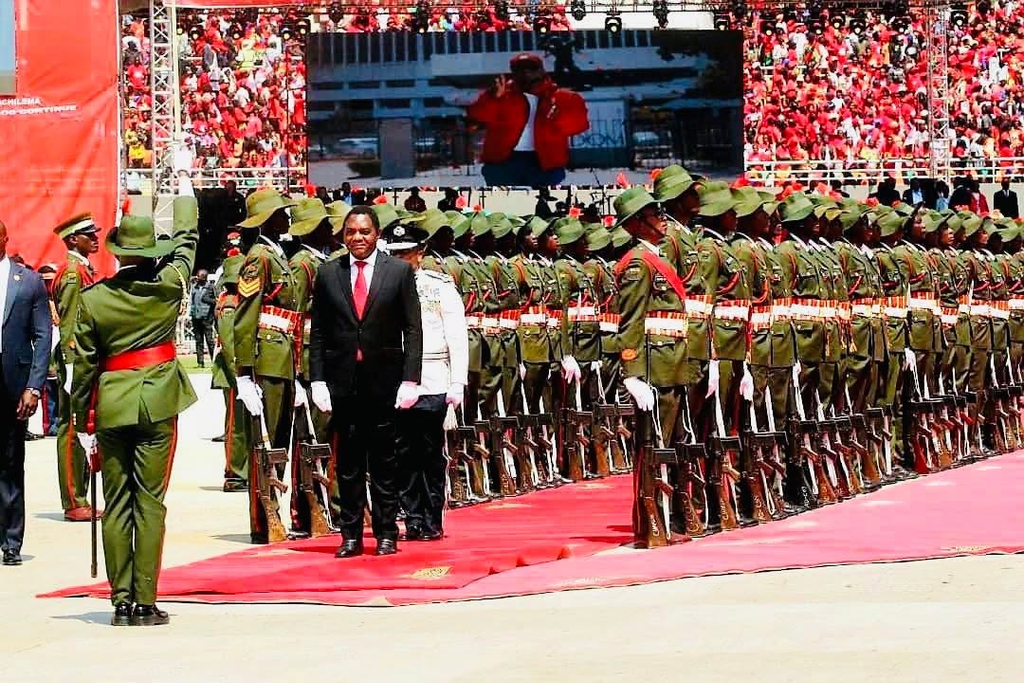
The swearing-in of President Hakainde Hichilema and Vice President W.K. Mutale Nalumango for the 2026–2031 term at National Heroes Stadium in Lusaka marks the formal beginning of another five years of the United Party for National Development administration.
The ceremony is constitutional. The responsibility that follows is political, economic and profoundly human.
Zambians have witnessed the speeches, the symbolism and the pageantry that accompany the transfer of political authority. But a second term cannot be judged by the grandeur of an inauguration. It must be judged by what happens after the crowds go home.
The real question is no longer whether Hichilema’s administration can promise change. It is whether it can deliver measurable improvements in the daily lives of ordinary citizens.
A second term carries a different burden
The first term of any government can be partly defended on the grounds of inherited problems. A new administration can point to the damage left by its predecessor, argue that institutions need rebuilding and ask citizens for patience.
A second term provides less room for that argument.
Hichilema now has the political advantage and the political burden of experience. His government knows the machinery of the state. It knows the challenges confronting Zambia. It has had time to identify what works and what does not.
That means the standards must rise.
Zambians should expect more than announcements. They should demand results that can be independently measured: stronger economic growth that reaches households, employment opportunities for young people, reliable electricity, improved health and education services, better roads and infrastructure, and a business environment that allows both large companies and small enterprises to survive and expand.
The government should also be judged by what happens to the cost of living. Macroeconomic indicators may improve while families continue struggling to afford food, transport, school expenses and other essentials.
Economic stability is important. But stability that ordinary people cannot feel in their pockets will inevitably generate frustration.
The danger of governing through statistics
One of the greatest risks facing the administration in its second term is the temptation to govern through impressive figures rather than lived experience.
Governments naturally highlight positive indicators. That is politics. But citizens experience government differently.
A farmer cares about the price of inputs and whether there is a reliable market for produce. A student cares about the quality of education. A parent cares about healthcare and food prices. A young graduate cares about whether there is a job. A small business owner cares about taxes, electricity, access to finance and the cost of operating.
These experiences cannot simply be dismissed because an economic indicator is moving in the right direction.
The second Hichilema administration will therefore need to bridge the gap between economic reform on paper and economic relief in people’s lives.
Democracy must remain bigger than political victory
A fresh mandate should never be interpreted as a blank cheque.
The administration has a responsibility to protect the institutions that make democratic government meaningful: Parliament, the judiciary, the media, civil society and other mechanisms of public accountability.
Political power is temporary. Institutions are supposed to endure.
This is particularly important during a second term because governments can become more confident, more politically entrenched and less receptive to criticism. That is precisely when independent scrutiny becomes more important—not less.
Criticism should not automatically be treated as hostility to government. Likewise, opposition should not be allowed to become opposition to the country itself.
Zambia needs a political culture in which government can be praised when it succeeds and challenged when it fails.
The opposition also has a responsibility
It would be unfair to place the entire burden of democratic accountability on the government.
Zambia’s opposition parties must also demonstrate that they are capable of offering serious alternatives rather than merely waiting for government mistakes.
The country does not benefit from permanent political outrage without policy substance.
Citizens deserve an opposition that scrutinises budgets, challenges legislation, investigates government failures and presents credible alternatives on the economy, employment, agriculture, healthcare and education.
A strong democracy requires both an accountable government and a competent opposition.
The Vice President’s role matters
Vice President Nalumango’s continued presence in the administration also deserves attention beyond the formalities of the swearing-in.
The Vice President is not merely a constitutional accessory to the presidency. The office carries responsibilities that directly affect governance and national administration.
The second term should therefore provide greater clarity about the Vice President’s role in coordinating government business, communicating policy and ensuring that national priorities are implemented effectively.
Citizens should be able to identify not only what the President is responsible for, but also what the Vice President and wider cabinet are delivering.
Five years is both a long time and a short time
The 2026–2031 term offers Hichilema an opportunity to consolidate his political legacy.
But history is unforgiving.
By the end of this term, voters will not remember every speech delivered at National Heroes Stadium. They will remember whether their lives became better, whether institutions became stronger and whether the country moved forward.
They will remember the price of food.
They will remember whether their children received a better education.
They will remember whether hospitals worked.
They will remember whether young people found opportunities.
They will remember whether the government treated citizens with dignity.
And they will remember whether those entrusted with public office remained accountable to the people who gave them that authority.
The honeymoon must end quickly
The inauguration is a moment for celebration. Governance is not.
The Hichilema-Nalumango administration now begins its second five-year term with fewer excuses and greater expectations.
The government should resist the temptation to spend the early years celebrating its achievements from the first term. Instead, it should publish clear priorities, establish measurable targets and regularly tell citizens not only what has been accomplished, but what has failed and why.
Transparency about failure is not weakness. It is responsible government.
The opposition, media and civil society should likewise resist the temptation to criticise everything simply because it comes from the ruling party. Zambia needs scrutiny that is evidence-based, not partisan.
Ultimately, the 2026–2031 term will not be defined by the oath taken today.
It will be defined by the choices made tomorrow.
President Hichilema and Vice President Nalumango have received another five years of political authority. But that authority belongs, ultimately, to the Zambian people.
The ceremony at National Heroes Stadium may have marked the beginning of the term.
The real inauguration begins when the government gets back to work.
